Build the load around orders, stops, and capacity.
Group sales orders, transfers, shipments, stops, pallets, lots, quantities, customers, delivery windows, equipment, temperature needs, and route requirements.
AJAX Logistics brings transportation execution into the same operational platform used by the warehouse. Plan and tender loads, assign carriers, coordinate appointments and docks, confirm staging and loading, capture shipment documents, record exceptions, and preserve delivery proof without rebuilding the story across calls, emails, and spreadsheets.
AJAX Logistics is designed to reduce status chasing when tenders, appointments, carrier communication, warehouse readiness, paperwork, freight cost, and delivery evidence are managed in separate systems.
Group sales orders, transfers, shipments, stops, pallets, lots, quantities, customers, delivery windows, equipment, temperature needs, and route requirements.
Record the carrier, rate, equipment, pickup, delivery, response status, timing, instructions, and communication history for each tender issued.
Track approved status, operating authority, insurance, equipment, service history, contact details, acceptance, rejection, cancellation, and replacement assignment.
Record carrier, customer, supplier, load, date, time, dock, shipment, purchase, transfer, and special-handling requirements.
Assign dock doors, show staging status, identify delays, confirm loading sequence, and preserve arrival, departure, and service timing.
Record base freight, fuel, detention, lumper, redelivery, storage, stop-off, temperature, brokerage, and other approved accessorial charges.
Attach bills of lading, packing documents, inspections, certificates, carrier records, rate confirmations, images, and customer-required documents.
Capture signatures, names, dates, times, locations, images, shortages, damage, refusals, temperature exceptions, and final proof of delivery.
The same order, shipment, pallet, lot, customer, carrier, tender, route, dock, document, exception, and cost reference can follow the load through every operational step.
Build the load, stops, equipment, schedule, capacity, shipment contents, customer requirements, and expected cost.
Issue the load to a carrier, record the response, and preserve the communication and tender history.
Capture driver, vehicle, trailer, appointment, arrival, documents, safety steps, and dock assignment.
Confirm warehouse readiness, staged pallets, lots, quantities, loading sequence, temperatures, and exceptions.
Record departure, route status, milestones, carrier updates, delays, temperature evidence, and delivery timing.
Capture proof, shortages, damage, claims, accessorials, final status, and the reviewed result required by finance.
Tendering is an operational event. Each tender issued can be tracked independently so the business can see which carrier received the opportunity, how the carrier responded, why the load changed, and which tender ultimately produced the accepted assignment.
Preserve the accepted rate, equipment, pickup, delivery, reference numbers, contact, and response timestamp.
Record rejection, cancellation, capacity failure, timing conflict, price issue, service restriction, or other reason.
When a load is re-issued to another carrier, preserve the original tender and create a new tender record rather than overwriting the history.
| Context | Transportation-Control Options |
|---|---|
| Carrier | Track approved status, insurance, authority, equipment, service history, contacts, and response rules. |
| Customer | Require appointment, routing, document, signature, image, delivery, or temperature proof. |
| Product | Apply cold-chain, food-safety, lot, shelf-life, segregation, inspection, or equipment requirements. |
| Route | Control stop sequence, delivery windows, mileage, instructions, access restrictions, and route-specific proof. |
| Exception | Route detention, late arrival, damage, shortage, temperature deviation, rejection, or failed delivery into review. |
Arrival, loading, departure, temperature, route, and delivery evidence should remain connected to the same load instead of being distributed across paper forms, email attachments, text messages, and carrier portals.
 Carrier and Appointment Readiness
Capture arrival, driver, vehicle, appointment, documents, safety acknowledgment, dock assignment, and warehouse readiness.
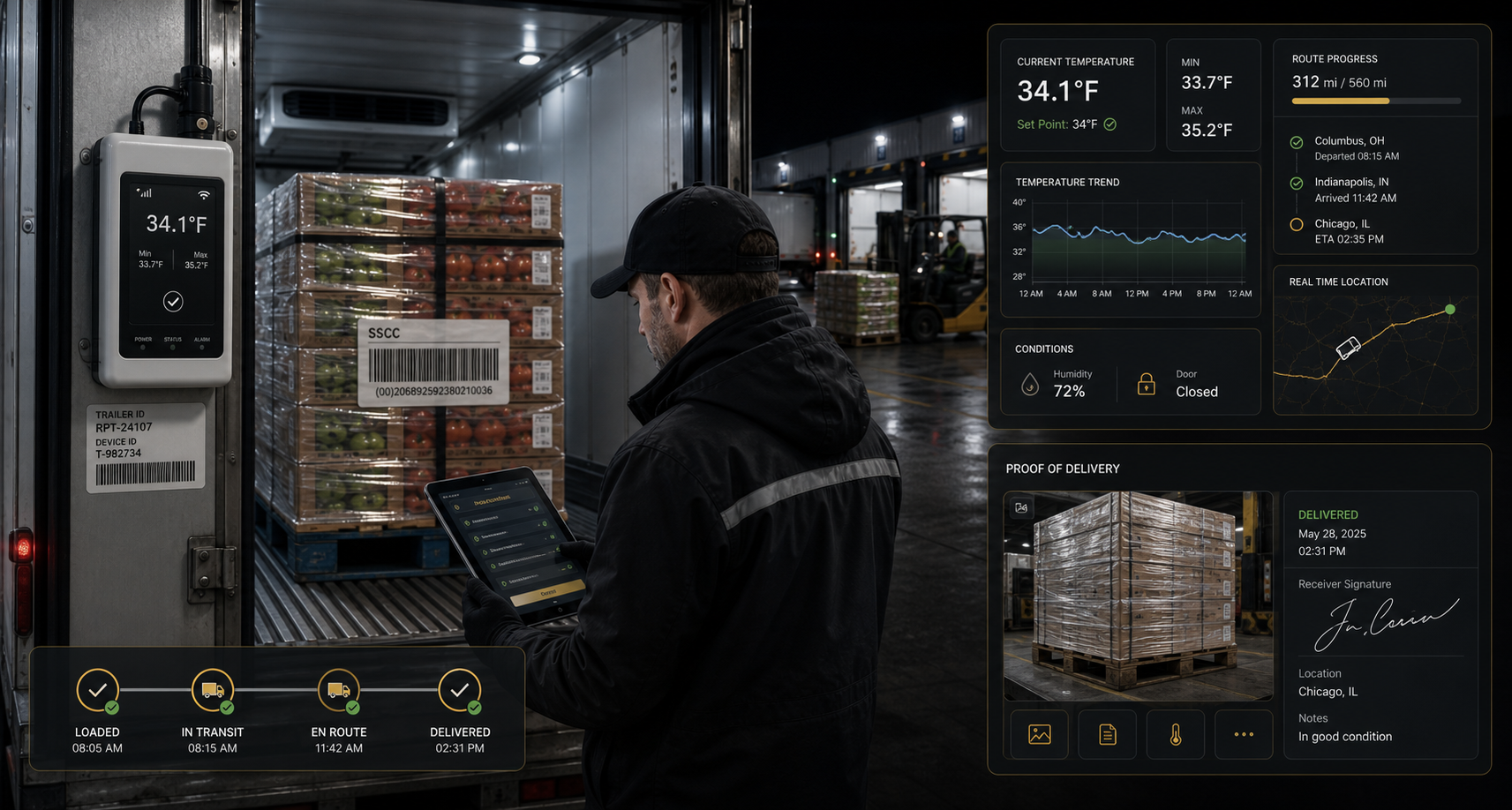 Cold-Chain and Delivery Proof
Preserve temperature records, images, signatures, route timing, delivery acceptance, shortages, damage, and shipment exceptions.
AJAX OES applications are designed to reduce manual handoffs between warehouse, dispatch, quality, customer service, finance, and executive reporting.
Pick status, staged pallets, lots, quantities, dock assignment, holds, loading readiness, and shipment confirmation can flow into logistics execution.
View WMSInspection results, release status, temperatures, photos, holds, damage, claims, and shipment conditions can remain connected to the same load.
View QMSBase freight, fuel, accessorials, detention, redelivery, claims, route complexity, and service requirements can help explain customer and sales-order profitability.
View ProfitabilityLoad tenders, responses, shipment status, advance ship notices, acknowledgments, invoices, and supporting documents can be connected to the operating record.
View EDIAJAX Logistics is designed to connect carrier and delivery activity to warehouse pallets, customer orders, shipment documents, quality evidence, freight cost, and Business Central transaction references already used by the operation.
Dock staff, dispatchers, warehouse users, drivers, carriers, supervisors, and customer-service teams can work from the same load context while authorized users retain control over Business Central shipment, payable, and financial posting.
Sales orders, warehouse shipments, transfers, returns, posted shipments, purchase documents, customers, vendors, carriers, and locations remain connected.
Pick status, staged pallets, SSCCs, lots, quantities, dock assignment, holds, and loading readiness remain visible.
Reviewed carrier charges, accessorials, supporting documents, shipment references, and payable-ready results remain connected.
Bills of lading, images, signatures, delivery times, shortages, damage, claims, and proof of delivery remain available.
Connected load data gives operations, finance, quality, and customer service a common record for reviewing service, evidence, cost, and exceptions.
Connect appointment, pick, staging, dock, documents, loading, and departure status so users spend less time calling, texting, and searching for answers.
Documents, images, signatures, temperatures, delivery times, shortages, damage, and exceptions remain connected.
Tender and assignment records help management review carrier responsiveness, service, rate history, and replacement frequency.
Detention, redelivery, lumper, storage, fuel, damage, shortage, and other charges can be reviewed against the load and supporting evidence.
Freight, route complexity, stop count, delivery requirements, exceptions, and accessorials can support cost-to-serve and sales-order profitability analysis.
Shared load records reduce repeated explanations, disconnected spreadsheets, and conflicting versions of shipment status.
Estimate AJAX OES pricing, create a tenant, and begin guided setup without waiting for a consultation.
Each load tender issued is treated as a separate operational tender event. A rejected, cancelled, broken, or re-tendered load may create an additional tender transaction when a new tender is issued.
Capabilities shown on this page describe the intended AJAX Logistics application and may include planned features. Final availability and scope depend on enabled applications, customer workflows, carrier participation, external services, device permissions, Business Central configuration, integrations, and implementation requirements.