Use repeatable templates and controlled questions.
Define checks, tolerances, measurements, required photos, pass-or-fail rules, comments, scoring, signatures, and item-specific questions.
AJAX QMS connects audits, inspections, measurements, samples, grading, photos, holds, releases, claims, corrective actions, and reporting directly to the pallet, lot, item, order, grower, supplier, customer, facility, and shipment involved.
AJAX QMS replaces disconnected notes, spreadsheets, image folders, email approvals, and verbal release decisions with device-friendly quality workflows tied to the operational object that caused the inspection.
Define checks, tolerances, measurements, required photos, pass-or-fail rules, comments, scoring, signatures, and item-specific questions.
Capture sample size, pallet, SSCC, lot, item, supplier, grower, order, date, user, location, and inspection method.
Record grade, defect, colour, size, maturity, temperature, condition, specification, acceptance, and pricing or settlement impact.
Capture product condition, packaging, labels, damage, defects, temperature, documents, corrective action, and release evidence.
Place an affected pallet, lot, quantity, item, bin, receipt, production output, shipment, or load into controlled quality status.
Release, reject, downgrade, rework, repack, return, destroy, donate, divert, or escalate with reason, approval, user, and timestamp history.
Preserve inspection details, photos, quantities, costs, deductions, credits, communications, responsibility, and claim status.
Assign owners, due dates, containment, root-cause notes, corrective action, preventive action, verification, approval, and closure evidence.
The same item, lot, SSCC, supplier, grower, order, shipment, location, user, template, evidence, and disposition can remain connected through the complete quality lifecycle.
Start an audit from receiving, production, movement, shipment, complaint, schedule, risk rule, or manual request.
Complete checks, measurements, photos, comments, sampling, grading, signatures, and required evidence.
Apply hold, warning, restricted use, rework, quarantine, or another configured status to affected product or work.
Approve release, rejection, downgrade, repack, return, diversion, claim, or corrective action.
Perform the approved disposition, update availability, notify affected teams, and preserve completion evidence.
Preserve the result, evidence, user, decision, cost, source record, approvals, and final outcome.
Quality requirements vary across suppliers, growers, customers, items, lots, facilities, seasons, production stages, and transportation conditions. AJAX QMS supports that variation without forcing every audit into one form.
Connect supplier, grower, purchase, transfer, lot, pallet, quantity, temperature, packaging, grade, and receiving condition.
Record production, assembly, repack, packout, regrade, sanitation, equipment, process, and operational checks.
Validate lot, grade, condition, packaging, shelf-life, temperature, labels, customer rules, certificates, and release status.
| Context | Quality-Control Options |
|---|---|
| Item and Lot | Use product-specific checks, tolerances, shelf-life, grade, defect, packaging, sampling, and release rules. |
| Supplier or Grower | Increase inspection frequency or evidence based on source, season, contract, performance, or risk. |
| Customer | Enforce customer-specific grade, temperature, shelf-life, label, photo, certificate, or acceptance requirements. |
| Facility and Process | Apply different templates at receiving, storage, production, repack, staging, loading, and shipment. |
| Exception | Route failed, incomplete, overdue, out-of-tolerance, missing-evidence, or high-risk audits into review. |
Measurements, photos, comments, source records, holds, approvals, corrective actions, and final disposition remain connected instead of being scattered across folders and email.
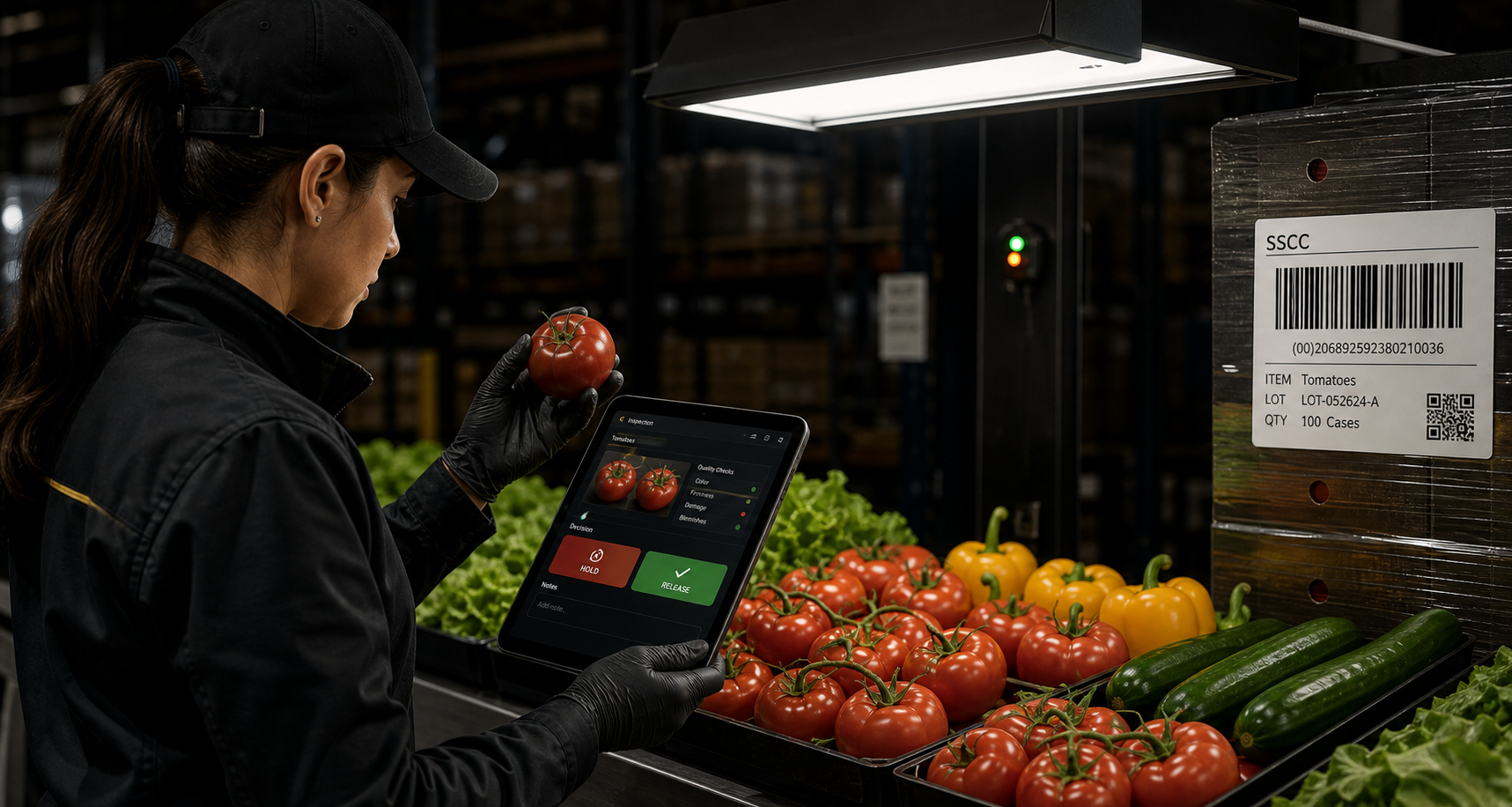 Inspection Evidence
Record measurements, grades, defects, comments, photos, user, time, pallet, lot, source document, and product condition in one quality record.
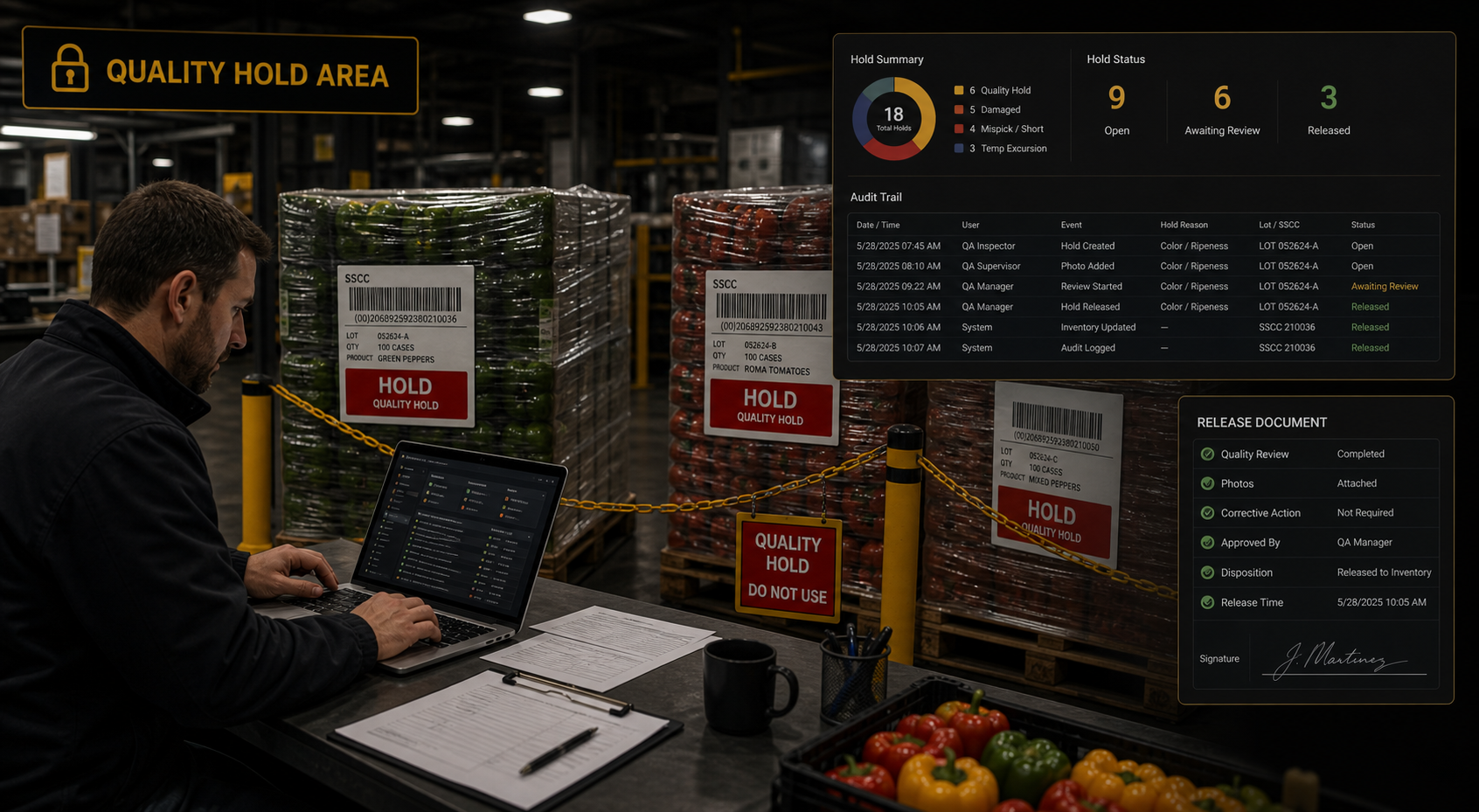 Hold and Release Control
Restrict affected product, route the decision to the correct authority, record disposition, and return approved inventory to controlled availability.
A quality decision may affect inventory availability, customer fulfillment, grower settlement, carrier claims, packout, product cost, and sales-order profitability.
Pallets, SSCCs, lots, bins, movements, picking, staging, availability, and shipment work can reflect holds and release decisions.
View WMSTrailer condition, temperature, load inspection, shipment hold, damage, rejection, shortage, claim, and delivery proof can remain connected.
View LogisticsGrower, contract, field, receipt, packout, grade, deduction, claim, pricing, inventory, and settlement impact can share the same evidence.
View Grower ManagementAudit labour, photos, rejection, shrink, rework, claims, downgrade, repack, and loss can help explain item, customer, grower, and sales-order profitability.
View ProfitabilityAJAX QMS gives inspectors, warehouse users, and supervisors the operational workflow required to collect evidence and control product while authorized users retain responsibility for financial, inventory, return, claim, and posting results.
Capture evidence on scanners, phones, tablets, laptops, and desktop browsers. Authorized quality users control holds, releases, dispositions, claims, and corrective actions.
Items, variants, lots, serials, expiration, units of measure, locations, bins, and availability remain connected.
Purchases, sales, transfers, returns, production, assembly, receipts, shipments, and warehouse work remain connected.
Vendors, customers, growers, dimensions, claims, credits, deductions, return reasons, and financial references remain available.
Reviewed inventory changes, returns, write-offs, reclassification, claims, and selected financial outcomes can be prepared for posting.
Structured quality history makes trends, evidence, and repeated failures easier to review without disconnecting the result from the source product and work.
Analyze by item, lot, supplier, grower, customer, facility, process, inspector, reason, grade, defect, season, and disposition.
Preserve templates, completed checks, photos, measurements, approvals, release history, corrective action, and source transaction references.
Structured results and labeled photos may support future image-assisted recommendations, subject to validation, customer approval, and qualified human review.
AJAX QMS pricing separates the recurring application fee from measurable operational usage so the customer can estimate quality cost alongside warehouse, logistics, and sales-order activity.
Each completed audit or inspection is an operational transaction used by the public pricing estimator.
Each photo captured through the quality workflow is a measurable usage transaction.
The current public pricing description includes up to one year of storage for QMS photos. Final retention, archival, export, deletion, and storage requirements depend on customer policy, configuration, legal obligations, and applicable service terms.
Photos, measurements, answers, lot detail, user actions, time, source records, and disposition remain connected.
Pallet-, lot-, and quantity-level status can keep acceptable inventory visible while questionable product is reviewed.
Compare source quality, claims, defects, grades, deductions, rework, packout, and settlement impact.
Required evidence, affected inventory, history, prior results, and approval authority can appear in one context.
Audits, photos, rework, claims, holds, repack, and losses can support item-level and sales-order profitability.
Shared records reduce repeated explanations, disconnected folders, and conflicting versions of the result.
Estimate AJAX OES pricing, create a tenant, and begin guided setup without waiting for a consultation.
AJAX QMS is designed to support customer quality, traceability, audit, evidence, hold, release, claim, and corrective-action workflows. It does not automatically establish regulatory compliance or replace qualified human inspection and approval.
Final availability, scope, retention, and results depend on enabled applications, customer specifications, policies, device permissions, data quality, Business Central configuration, integrations, validation, legal requirements, and implementation.